
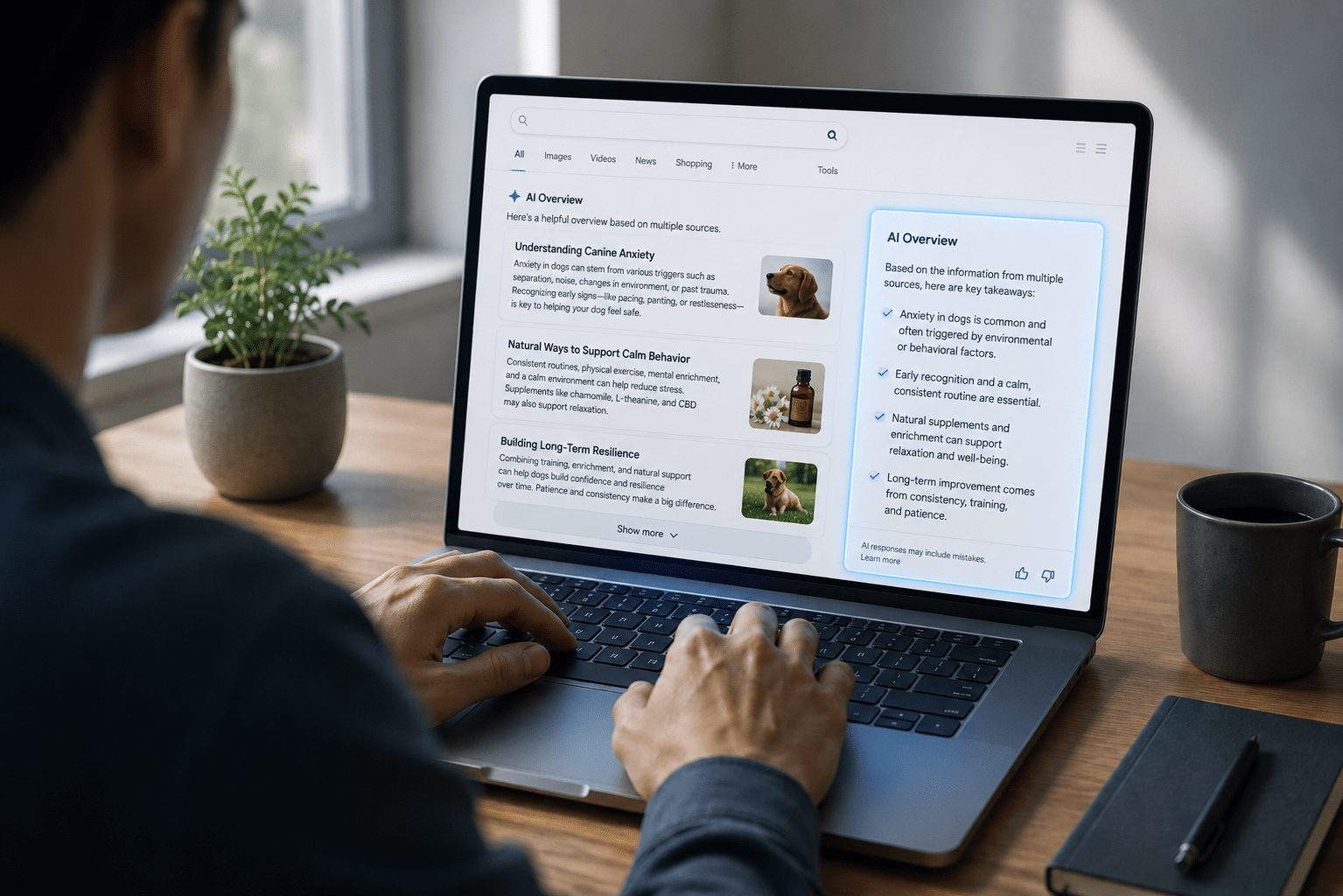
Google AI Overviews pull answers from pages that are easy for a machine to read, structured with clean semantic code, and fast on mobile. Web design choices like layout, heading order, schema, page speed, and image handling decide whether your page is quoted or ignored. The design, not just the writing, is what gets you cited.
Most business owners think of an AI Overview as a content problem, something you fix by writing better paragraphs. That belief misses where most of the trouble actually starts, which is in the code and structure underneath the words. A page can be well written and still hand Google nothing clean to lift, because the design never made the answer findable.
This matters more every month as that generative box at the top of search keeps taking the clicks that used to go to the blue links below it. When a San Antonio customer searches for a service and reads the AI answer first, the page Google chose to quote gets the attention, and everyone below it competes for scraps. The web-design decisions on your page are quietly deciding which side of that line you land on.
At Texas Web Design, we build and rebuild sites for businesses across San Antonio and the Hill Country, and we keep finding the same pattern: strong content trapped inside a structure no engine can parse. If your pages rank but never get cited, request a free design and AI visibility review, and we will show you exactly which design signals are holding you back.
Why Does Web Design Decide Whether Google Quotes Your Page?
Google AI Overviews work by extracting a short, trustworthy answer from a page and stitching it into a summary, so the engine needs a page it can read cleanly and confirm quickly. That reading job depends almost entirely on how the page is built, not how nicely it reads to a person. A human forgives a messy layout because the eye fills in the gaps, but a machine only sees the raw code, and bad design leaves it guessing.
The shift is already large enough to matter for every local owner. According to Conductor’s analysis of 21.9 million queries, Google AI Overviews now trigger on roughly 25 percent of searches, up from about 13 percent in March 2025. Google still handles about 85.51 percent of U.S. searches (Statcounter, May 2026), so its AI summaries reach more San Antonio customers than any other engine combined.
When a quarter of searches now open with a generated answer, the design question stops being cosmetic. The pages that get pulled into those answers are the ones built to be read by a machine first, and that is a design decision long before it is a writing one.
Which Web Design Choices Affect AI Overview Citations Most?
The design choices that move AI Overview visibility are the ones that change how readable and trustworthy your page looks to a machine. Some carry far more weight than others, so it helps to see them ranked by impact before you spend a dollar fixing anything. The table below maps each common design decision to what it does for your odds of being quoted.
| Design Choice | Effect on AI Overview Odds | Impact |
| Clean semantic HTML (real headings, lists, tables) | Gives the engine a clear map of the page so it can find the answer | High |
| Schema markup (LocalBusiness, Article) | Turns your business and content into confirmed facts, not guesses | High |
| Mobile page speed and Core Web Vitals | A slow phone load can drop the page before the content is even judged | High |
| Heading hierarchy (one H1, logical H2 and H3) | Tells the engine what each section answers so it can pull the right line | Medium |
| Answer-first section layout | Puts a quote-ready sentence where the engine looks first | Medium |
| Image alt text and accessible markup | Adds context that the engine can read where images carry meaning | Lower |
The top three rows are where most of the work pays off, because they decide whether the page is readable at all. Get those right, and the rest are refinements that sharpen an already-citable page.
How Page Structure and Heading Order Make a Page Quote-Ready
A quote-ready page leads each section with a direct answer and uses real headings to label what that section covers. Google reads the heading, looks at the first sentence or two underneath it, and decides whether there is a clean line worth lifting. When the structure is clear, the engine finds its answer fast, and your page becomes the easy choice to cite.
Strong structural design for AI Overviews comes down to a few repeatable habits we build into every page:
- One H1 and a logical heading order: a single page title followed by H2 and H3 sections that never skip levels, so the engine reads a clean outline instead of a jumble.
- Answer-first sections: every heading is followed by a plain sentence that answers it directly, giving the engine a quote it can pull without rewriting.
- Real lists and tables: comparisons and steps live in true list and table tags, not styled paragraphs, so grid-shaped information stays machine-readable.
- Short, self-contained paragraphs: each idea stands on its own, because engines often extract a sentence out of context and need it to make sense alone.
For a San Antonio service business, this structural design is what separates a page that ranks from a page that gets quoted. The deeper breakdown in our guide to what AI search engines look for in a website walks through each of these signals in order.
Do Schema and Semantic Code Help You Get Cited?
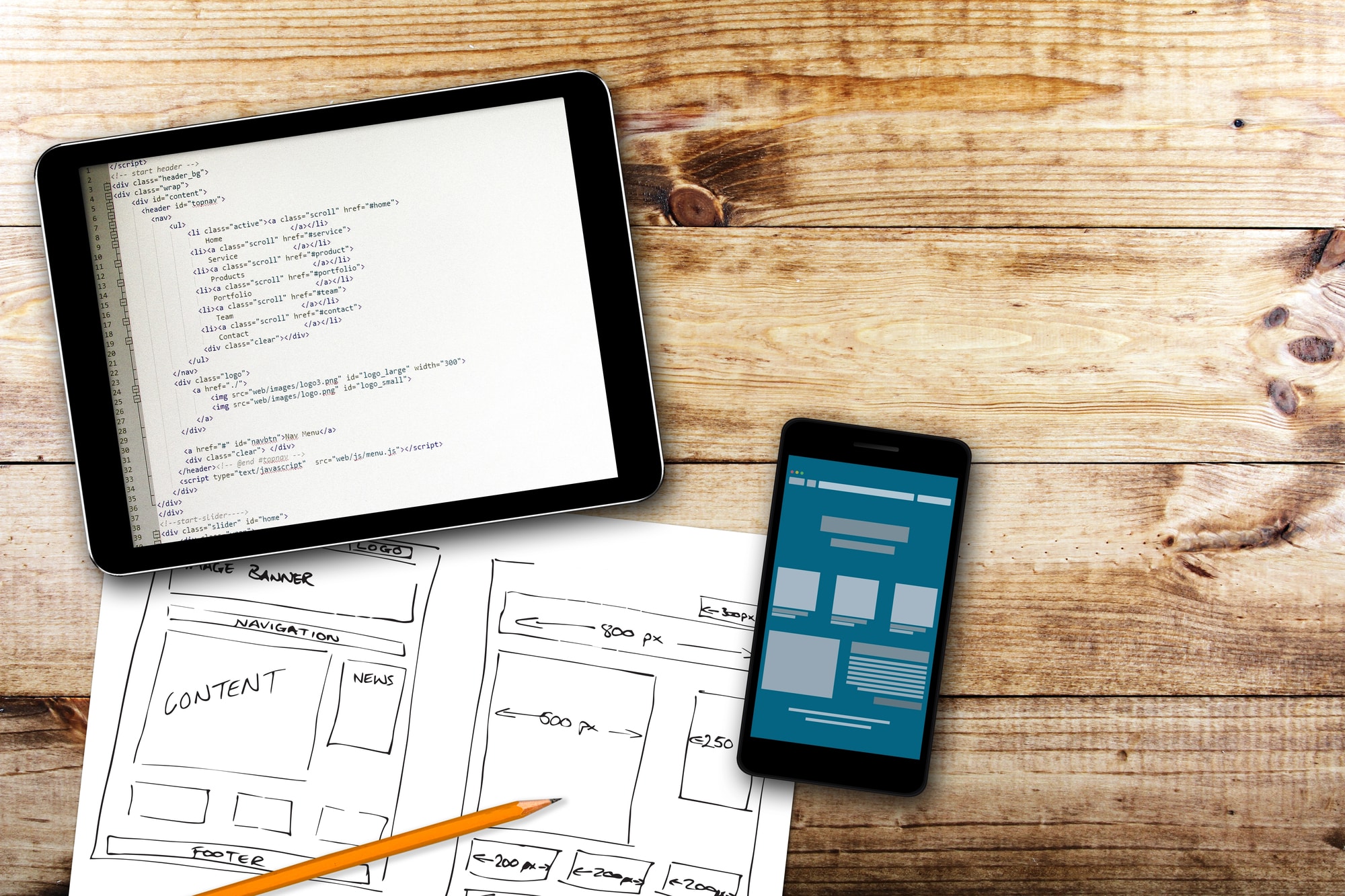
Schema markup labels your business name, address, phone, and content type in code that the engine reads as truth, while semantic HTML gives every section a real role on the page.
Together, they remove the guesswork that keeps an AI Overview from trusting a page enough to quote it.
The contrast is easy to picture. A page built on fake headings and styled <div> blocks looks fine to a visitor but reads as one undifferentiated blob to a machine, so the engine has no clean place to find your answer.
A page built on proper tags and backed by LocalBusiness and Article schema reads as a structured, verifiable source, which is exactly the kind of page Google prefers to cite.
For a local San Antonio business, the schema piece is doubly valuable, since it ties your page to a verifiable identity. When your name, address, and phone number match across your site, your Google Business Profile, and the rest of the web, the engine can confirm who you are and feel safe naming you in an answer.
How Does Page Speed and Mobile Design Affect AI Overview Visibility?
Page speed and mobile design affect AI Overview visibility because a page that loads slowly or breaks on a phone can be passed over before its content is ever weighed. Google’s index is mobile-first, so the version of your page that matters most is the one a phone sees, and a poor Core Web Vitals score on mobile is a signal that travels through every layer of ranking. A page the engine struggles to load is a page it is reluctant to feature.
Speed is a design decision more than a content one, and a few design habits keep a page fast enough to compete:
- Right-sized, modern images: serving compressed, properly dimensioned images in current formats so the page paints quickly on a phone.
- Lean code and a few heavy scripts: trimming bloated builders and stray third-party scripts that stall the load and hurt layout stability.
- Stable layout on load: reserving space for images and embeds so content does not jump around while the page settles.
We build with mobile-first development practices for exactly this reason, because fixing speed after launch costs far more than building it in. For San Antonio customers searching on their phones from a job site or a parking lot, mobile speed is often the difference between being seen and being skipped.
What Should a San Antonio Business Fix First on an Existing Site?
The fastest path is to fix the design signals in the order an engine reads them, starting with structure and ending with polish. Trying to do everything at once spreads the effort too thin, so we work the signals in sequence, since each one builds on the last. This is the order we use when we rebuild a page for AI visibility:
- Repair the structure. Rebuild on clean semantic HTML with one H1, logical headings, and real lists and tables, because nothing else helps until the engine can map the page.
- Add the schema. Implement LocalBusiness and Article markup so the engine reads your business and content as confirmed facts.
- Fix mobile speed. Bring Core Web Vitals into the green on a phone, since mobile performance feeds both AI Overviews and Google’s mobile-first index.
- Rewrite for answers. Open each section with a single plain sentence that answers the heading, and weave the San Antonio and Texas context into the body.
For the schema, technical structure, and content work that is hard to handle alone, our SEO services for San Antonio businesses cover the heavy lifting. The pattern we see across the city is consistent: the businesses getting cited are not always the biggest, just the ones whose pages are built to be read.
Build the Page to Be Read, Then Watch the Citations Follow
A page that ranks but never gets quoted is losing visibility every week to whichever competitor built theirs to be read, and most owners never realize the gap is a design problem. The fixes are sequential and far cheaper before another year of legacy code stacks up, and they start with the structure beneath the words, not the words themselves. Knowing which design signals your page sends is the step most businesses skip, and it is the one that decides who gets cited.
At Texas Web Design, we build, rebuild, and optimize business websites across San Antonio and Texas for both traditional rankings and the AI Overviews now sitting above them. Call us today at 210-985-8528 for a free design and AI visibility review, and we will tell you exactly which design fixes will move your page into more answers.
Frequently Asked Questions
Does web design really affect Google AI Overview rankings?
Yes. Web design controls how readable and trustworthy your page looks to the engine through its code, structure, schema, and speed, and those signals decide whether your answer can be extracted and quoted at all.
What is the single most important design factor for getting into an AI Overview?
Clean semantic structure is the foundation, because an engine cannot quote what it cannot map. Without real headings, lists, and tags, even great content stays invisible to the summary.
Can a well-designed page get cited even if it ranks lower than competitors?
Often yes. AI Overviews pull the clearest, most quotable answer rather than only the top-ranked page, so a well-structured page can earn a citation that a higher-ranking but messier page misses.
How does schema markup help my San Antonio business appear in AI answers?
Schema turns your business name, address, phone, and content into confirmed facts the engine can trust. For a local business, LocalBusiness and Article schema make it far easier for Google to verify you and name you in an answer.
Will fixing my mobile page speed improve AI Overview visibility?
It can. Google indexes the mobile version of your page first, so a slow or unstable phone load can keep a page out of consideration before its content is judged, and fixing speed removes that barrier.
Do I need a brand-new website, or can my current one be fixed?
It depends on the foundation. A site with clean code and reasonable mobile speed can usually be upgraded in place, while older template sites built on faked structure often need a rebuild to become readable.
How long after design fixes will my page start showing up in AI Overviews?
There is no fixed timeline. Well-structured local pages can begin appearing within weeks of re-indexing, while pages missing structure or schema may never appear until those design gaps close.
Is designing for AI Overviews different from designing for normal Google rankings?
They overlap heavily but are not identical. Both reward speed and clean structure, but AI Overviews lean harder on schema, semantic code, and answer-first sections that let the engine extract and quote your page.
