
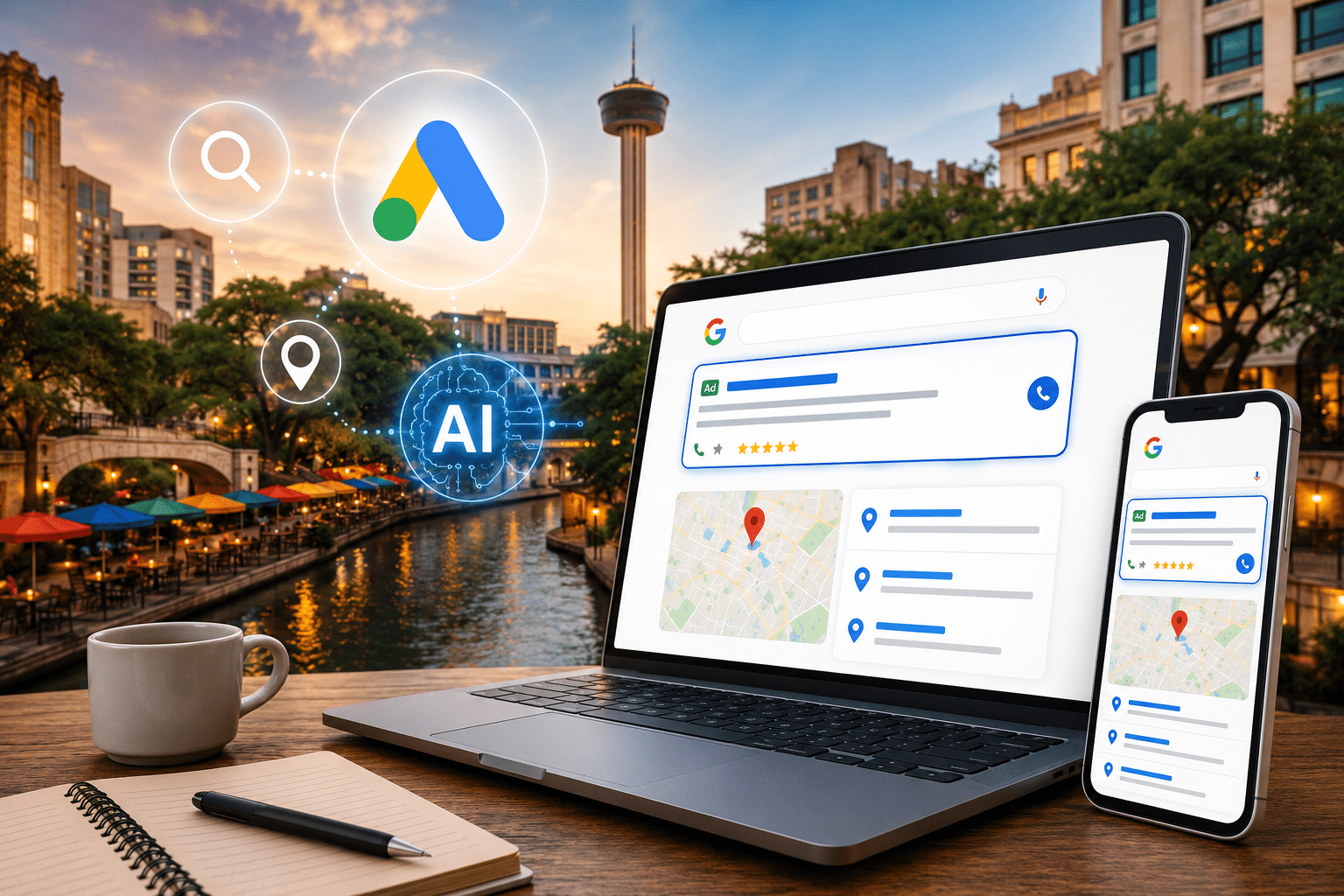
Google Ads gives a business a paid spot at the top of the results page that an AI Overview cannot push out of view. As AI summaries answer more questions and shrink organic clicks, paid search becomes a reliable way to stay in front of buyers who are still ready to act. The smart play is using ads to defend visibility while the organic side catches up.
For a long time, the path to leads was steady: rank on Google, wait for the clicks, and answer the phone. That path is narrowing because an AI summary now sits at the top of many results and answers the question before a single link gets a look. A San Antonio customer can read that summary, feel satisfied, and never scroll to the organic results where your page lives.
This puts owners in a tough spot they did not choose. The organic rankings you spent years earning may still be there, yet fewer people are clicking them because the answer arrived before the links did. Paid search is one of the few levers you can pull today that keeps your business visible above and around those summaries.
At Texas Web Design, we help businesses across San Antonio and the surrounding Hill Country defend their visibility as search behavior shifts under their feet. If your traffic has softened and you are not sure whether AI Overviews are the reason, request a free paid-search review and we will show you where ads can hold the ground your organic listings are losing.
AI Overviews Are Quietly Compressing the Clicks You Used to Earn
 The squeeze is real and it is measurable. When an AI Overview appears, the share of people clicking a traditional result drops sharply, because the summary answers the question on the page itself. That means a strong organic ranking now delivers fewer visitors than it did a year ago, even when nothing about your page changed.
The numbers from independent studies are hard to ignore. The Pew Research Center found that searches showing an AI summary produced a click on a traditional result just 8 percent of the time, compared to 15 percent for searches without one. Seer Interactive’s analysis measured a 61 percent drop in organic click-through rate on AI Overview queries, falling from 1.76 percent to 0.61 percent.
This is not a fringe scenario you can wait out either. According to Conductor’s analysis of 21.9 million queries, Google AI Overviews now trigger on roughly 25 percent of searches, up from about 13 percent in March 2025. With Google still handling about 85.51 percent of U.S. searches (Statcounter, May 2026), a quarter of those searches reaching your San Antonio customers through a summary first is a real share of lost attention.
Do Paid Ads Still Show Up When an AI Overview Appears?
Yes, paid ads still appear on results pages that show an AI Overview, and that is exactly why they matter right now. Google continues to place ads at the top of the page and around the summary, so a paid listing can sit in view even when organic links get buried below the fold. That placement is the core of the defensive case for Google Ads.
Paid clicks took a hit from AI Overviews too, but they did not disappear. Seer Interactive measured paid click-through rate on AI Overview queries falling from 19.7 percent to 6.34 percent, a 68 percent drop, which tells you competition for those clicks is real. The same research found a clear upside worth noting: brands cited in an AI Overview earned 91 percent more paid clicks, so paid and AI visibility reinforce each other rather than cancel out.
For a San Antonio business, the takeaway is practical. While you work on earning organic citations, which can take months, a well-built ad keeps you on the page today for the searches that bring in calls and form fills.
Target Intent, Not Just Keywords, So Every Dollar Defends a Real Buyer
The defensive value of Google Ads only holds if you spend on searches that signal a ready buyer, not casual research. AI Overviews are very good at answering informational questions, so bidding on broad “how to” or “what is” terms now competes directly with a free summary. The dollars work harder when they back searches that show clear buying intent instead.
A simple way to see the difference is to sort your target searches by how close they sit to a purchase. The table below shows how we think about intent tiers for a local San Antonio campaign and where each one belongs.
Putting your budget behind the top two rows keeps spend pointed at people who are choosing a provider, not browsing definitions. That focus is what turns a defensive ad strategy into a profitable one.
Why Does the Landing Page Decide Whether Your Ad Pays Off?
A Google Ad only earns its cost when the page behind it answers the same question the searcher just asked. A buyer who clicks an ad for “San Antonio website redesign” and lands on a generic homepage usually leaves, which wastes the click you paid for and tells Google your page is a weak match. Matching the page to the ad is the difference between a click and a customer.
There are three parts to a landing page that earns its keep, and skipping any one of them quietly raises your cost per lead.
Message Match
 The headline on the page should echo the search and the ad almost word for word. When someone searches for a San Antonio web designer and the page opens with that exact promise, they trust they are in the right place and stay long enough to act.
Speed and Mobile Readiness
Most local searches happen on a phone, so a slow page bleeds away the visitors your ad just bought. We build using mobile-first landing pages, because a page that loads fast and reads cleanly on a phone protects both your ad spend and your Quality Score.
One Clear Action
A landing page that earns leads asks for one thing, whether that is a call, a form, or a quote request. Extra menus and competing buttons split attention and lower the chance that an expensive click turns into a real inquiry.
How Should a San Antonio Business Budget and Measure This?
Treat the ad budget as defense spending: enough to hold visibility on the searches that matter, measured against leads rather than clicks. The goal is not to outspend national brands but to stay present for the local searches where you can win. Tracking the right numbers keeps that spend honest and tells you when to push or pull back.
A focused local campaign usually starts with a short list of habits that keep the budget working:
- Start narrow and local. Concentrate the first budget on high-intent San Antonio searches rather than spreading it thin across the whole metro, so early data is clean and useful.
- Track calls and forms, not just clicks. Set up conversion tracking so you know which searches produce real inquiries, since a click that never calls is not a win.
- Watch cost per lead, not cost per click. A higher click cost on a search that converts often beats a cheap click that never does, especially as paid competition rises on AI Overview queries.
- Pair ads with strong organic work. Use paid search to hold the present while improving the pages and signals that earn free visibility over time.
Reviewing these numbers every couple of weeks keeps a small budget disciplined. That discipline matters more now, because paid competition climbs as more businesses turn to ads to offset the same organic losses you are feeling.
Should You Stop Investing in SEO and Just Run Ads Instead?
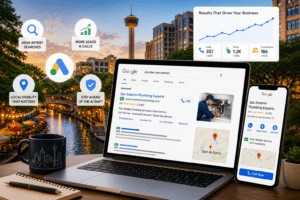 No, dropping organic work would trade a short-term fix for a long-term hole. Ads keep you visible today, but they stop the moment the budget stops, while strong organic content and structure keep earning attention and AI citations long after the work is done. The durable strategy runs both at once, with each covering the other’s weak spot.
The two channels actually feed each other in the AI era. The same research that flagged the click squeeze also found that brands cited in AI Overviews earned far more paid clicks, so the structured, well-written pages that win citations also make your ads work harder.
If you want the fuller picture of how generative search differs from classic ranking, our explainer on the difference between GEO and SEO walks through what each one rewards. For the organic side of the defense, our SEO services for San Antonio businesses handle the structure and content that earn citations paid search cannot buy.
Hold Your Visibility Now, Then Build the Lead Flow That Lasts
The businesses that stay visible through this shift are the ones that defend the present and build the future at the same time. Paid search keeps you on the page for the buyers who are still clicking, while smart organic work earns the citations that paid clicks cannot buy. Waiting for the AI dust to settle only hands those buyers to competitors who acted first.
At Texas Web Design, we plan, build, and measure paid search and organic visibility together for businesses across San Antonio and the Hill Country, so your leads do not dry up while search changes around you. Call us today at 210-985-8528 for a free paid-search review, and we will show you exactly where ads can hold your visibility and where organic work will carry it forward.
Frequently Asked Questions
Do Google Ads still appear above AI Overviews?
Yes, Google continues to place ads at the top of the results page and around AI Overviews, so a paid listing can stay in view even when organic links sit below the summary. That visibility is the main reason paid search works as a defense during the AI shift.
Are AI Overviews hurting paid search too?
Paid clicks did take a hit, with Seer Interactive measuring paid click-through rate on AI Overview queries falling from 19.7 percent to 6.34 percent. Paid listings still appear and still convert, though, which is why they remain a reliable way to stay visible.
Should a small San Antonio business run Google Ads right now?
It often makes sense if organic clicks have softened and you need leads while you rebuild visibility. A focused campaign on high-intent local searches keeps you in front of ready buyers without competing for the broad questions AI summaries now answer for free.
How much should I spend on Google Ads each month?
There is no single figure, since the right budget depends on your services, competition, and lead value. The better approach is to start narrow on local high-intent searches, measure cost per lead, and scale only the campaigns that produce real calls and form fills.
Why are my Google Ads not getting clicks anymore?
A common reason is bidding on broad informational searches that an AI Overview now answers before anyone clicks an ad. Shifting budget toward local, buying-intent searches and tightening your landing page match usually recovers performance.
Will Google Ads help me show up in AI Overviews?
Ads and AI citations are separate systems, so paid spend does not directly place you in a summary. They reinforce each other, though, since the structured pages that earn citations also raise ad quality, and cited brands tend to earn more paid clicks.
What makes a good landing page for a Google Ad?
A strong landing page matches the ad headline, loads fast on mobile, and asks for one clear action like a call or a quote. When the page answers the exact search behind the click, more visitors convert and your cost per lead drops.
