
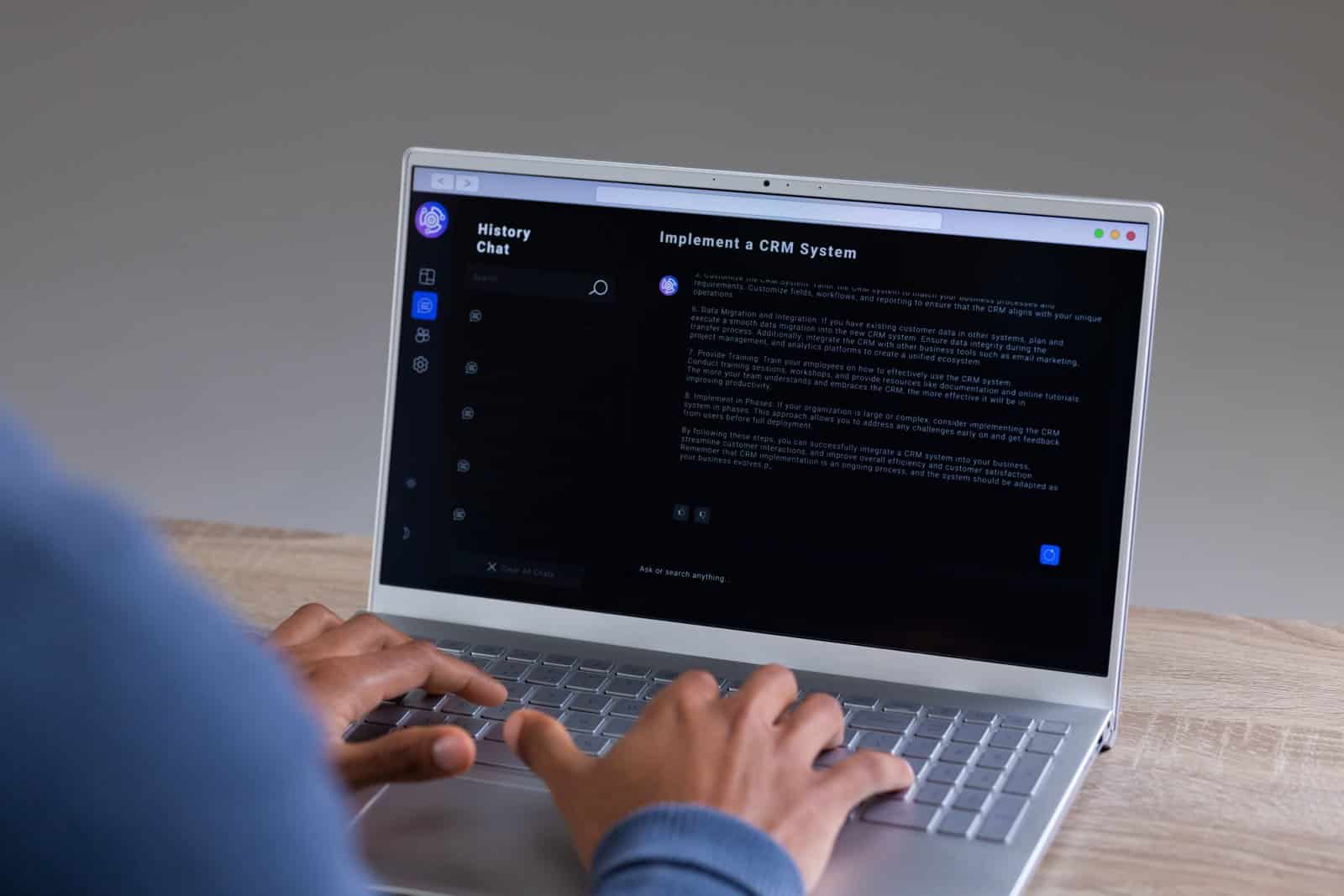
Yes, ChatGPT can now build and publish a simple website through its Sites feature on paid plans. For a San Antonio business, that is a starting point. You still need a domain you own, accurate copy, forms that reach you, accessible pages, and fast mobile load times. Someone also has to keep the site updated, and a developer fills those gaps and connects it to the tools you already run.
Last Updated: November 4, 2026
Table of Contents
- What Can ChatGPT Build for a San Antonio Business Website?
- Where Does a ChatGPT-Built Website Fall Short for San Antonio Businesses?
- When Should a San Antonio Business Use ChatGPT, and When Should It Hire a Developer?
- How Can You Tell If a Generated Site Is Hurting Your San Antonio Business?
- Get a San Antonio Website Built to Bring In Business
- Frequently Asked Questions
At Texas Web Design, we build websites and web applications for San Antonio businesses that want a site doing real work. If you’ve watched ChatGPT write code in seconds, you may wonder whether you need a developer at all.
The short answer is yes: ChatGPT can build one, with limits. OpenAI’s ChatGPT Sites feature can create, preview, publish, and share a website from a written prompt on paid plans.
What it builds and what a business site needs are two different things. Below, we cover what ChatGPT can make, where it falls short, and how to tell which route fits your business.
What Can ChatGPT Build for a San Antonio Business Website?
ChatGPT can write and fix website code, draft page copy, and publish a basic site or lightweight app through its Sites feature. That covers early work for a San Antonio business, but a person still has to check every piece before customers see it.
Code You Can Read, Edit, and Debug
OpenAI built its canvas workspace for writing and coding projects. Its coding shortcuts can review code, add comments, fix bugs, and port code to languages such as JavaScript, Python, and PHP.
That makes ChatGPT a quick way to draft a page layout, a contact form, or a small script. You can paste the result into a test file and see what it does.
The output still needs someone who can read it. A form that looks right can send messages nowhere, and a layout can break on a small screen. Our guide to AI tools in web design covers where other AI tools fit.
A Published Site Through ChatGPT Sites
In OpenAI’s words, Sites lets you “create, preview, publish, and share interactive websites and lightweight apps” from ChatGPT. It’s available on ChatGPT Plus and Pro and in Business and Enterprise workspaces. The Free and Go plans don’t include it.
You describe the site, review a private preview, and ask for changes until it looks right. New Sites are private by default, so you choose who can see one before it goes public.
OpenAI says Sites hosting is currently included with Plus and Pro. Building or editing a Site counts toward your Codex usage, so heavy revisions use up part of your plan.
Draft Copy for Your Pages
ChatGPT can draft headlines, service descriptions, and FAQ answers in seconds. In a 2026 survey by Pew Research Center, 44% of U.S. adults said they use ChatGPT.
OpenAI’s help center advises using ChatGPT “as a first draft, not a final source” for anything important. It warns that the model can invent facts, quotes, or citations and may sound confident when wrong.
On a business site, wrong copy costs more than a little embarrassment. A wrong service area, an invented credential, or an old price can cost you a lead or a customer’s trust.
Where Does a ChatGPT-Built Website Fall Short for San Antonio Businesses?
A ChatGPT-built site usually falls short in the parts customers never notice until something breaks: domains, forms, integrations, sensitive data, and upkeep. These four warning signs show when a generated site needs a developer’s hands before it represents your business.
You Still Need a Domain You Own
OpenAI says plainly that Sites does not register a domain for you. You must already own the domain and be able to change its DNS records to point it at your Site.
Until then, the site lives on a chatgpt.site address. That works for a test, but customers expect your business name in the web address.
OpenAI’s troubleshooting notes that a custom domain can stay pending and return a 404 error until the DNS records are right. When we launch a site, we handle domain configuration, SSL setup, and server deployment. Our guide to how long it takes to build a business website shows where launch fits.
Forms and Payments Need Careful Setup

OpenAI tells Site owners to test forms before publishing. Leave required fields blank, enter bad data, and check that the Site explains what to fix.
Payments add more work. OpenAI says you’re responsible for connecting, configuring, and maintaining any third-party payment processor you use on a Site.
Sites also must not process sensitive data such as protected health information or payment-card data, unless card data runs solely through a third-party processor. Speaking generally, and without giving compliance advice, that likely rules out patient intake forms for a San Antonio dental office or clinic.
Your Other Business Tools May Not Connect
Most business sites have to talk to other software. On our builds, we integrate sites with CRMs such as HubSpot, payment processors such as Stripe, and scheduling tools such as Calendly.
OpenAI notes that some frameworks, databases, background services, and hosting patterns may not be supported in Sites. A connection your business depends on may not be possible on that platform.
If your staff retypes every web lead into another system, your site and your tools aren’t talking. Our post on why a custom website helps you compete in AI search explains another reason a custom build pays off.
Nobody Is Watching Updates and Security
A website isn’t finished at launch, whatever it’s built on. If your AI-drafted code ends up on WordPress, the WordPress documentation warns that older versions are not maintained with security updates.
A ChatGPT Site carries its own platform risk. OpenAI may remove or restrict a Site if there’s a risk it violates OpenAI policies, so your storefront depends on rules you don’t control.
Our maintenance plans cover software and plugin updates, security monitoring, daily backups, and uptime monitoring. Someone owns the job of keeping the site healthy every week.
When Should a San Antonio Business Use ChatGPT, and When Should It Hire a Developer?
Use ChatGPT for drafts, prototypes, and simple internal pages, or do both by starting with an AI draft and finishing with a professional build. Hire a developer when the site has to bring in leads, take bookings, connect to your software, or handle customer data.
- ChatGPT fits small, low-risk jobs. Think of a one-page event site, a mockup for a designer, or an internal staff tool.
- A developer fits revenue-critical sites. Businesses that live on calls, leads, bookings, or online sales need tested forms and steady upkeep.
Weighing a builder against a pro? Our comparison of web design vs DIY website builders covers the trade-offs. It also helps to know the difference between a web designer and a web developer before you hire.
Have a ChatGPT draft? Our contact form reaches our team for a second opinion.
How Can You Tell If a Generated Site Is Hurting Your San Antonio Business?
Check four things: speed, accessibility, accuracy, and forms, using the table below to pair each risk with its effect and a practical fix. A site can look finished and still load slowly on phones, shut out visitors with disabilities, state false facts, or lose leads.
San Antonio had an estimated 1,548,422 residents on July 1, 2025, according to the U.S. Census Bureau. That’s a large local market, and every visitor who leaves a broken page is a lead you never hear from.
| Factor | Effect on Your Site | What Helps |
|---|---|---|
| Slow loading | Google asks for the main content to load within 2.5 seconds (Largest Contentful Paint) | Check the Core Web Vitals report in Search Console and fix the slow pages it lists |
| Accessibility gaps | The Department of Justice says the ADA applies to businesses open to the public | Test pages against WCAG 2.2, the version the W3C advises using |
| AI-written errors | Google warns that generative AI output may contain inaccuracies | Fact-check every claim, page title, and meta description before publishing |
| Untested forms | Leads can disappear without anyone noticing | Submit blank and invalid entries, then confirm a real test message arrives |
Google doesn’t punish a page simply for using AI. Its guidance says appropriate use of AI is not against its guidelines. Generating many pages without adding value, though, may violate its scaled content abuse policy.
Our web design services build mobile layouts and fast load times into every custom site from the start.
Get a San Antonio Website Built to Bring In Business
ChatGPT can give a San Antonio business a fast first draft, and its Sites feature can even put a simple site online. A site that wins calls, protects customer data, and stays current still needs a developer’s hands and regular checks.
At Texas Web Design, we handle the build, launch, and upkeep through our web development services. Ask our San Antonio team at (210) 985-8528 what your site needs before it goes live.
Frequently Asked Questions
Is web dev replaced by AI?
No, AI tools can write and fix code, but people still plan, check, and maintain websites. The U.S. Bureau of Labor Statistics projects jobs for web developers and digital designers to grow 5 percent from 2025 to 2035. BLS says that 2025 to 2035 growth for web developers is faster than the average for all occupations.
What is custom website development?
Custom website development means building a site from scratch around how your business works, instead of squeezing your business into a template. It gives you full control over design, features, and functionality. It suits businesses with unique processes or specific integration needs, such as a booking system or a CRM connection.
How can I build my own custom website?
You can start with an AI tool such as ChatGPT Sites, which builds a site from a written description on paid plans. Plan your pages first, connect a domain you already own, test every form, and fact-check all AI-written copy before you publish. Bring in a developer for integrations or customer data.
Can I pay someone to create a website for me?
Yes, you can hire a web developer or agency to plan, design, build, and launch your site. A solid process covers a consultation, planning, design mockups, development, testing on phones and browsers, and a launch with domain and SSL setup. Support should continue after the site goes live.
